
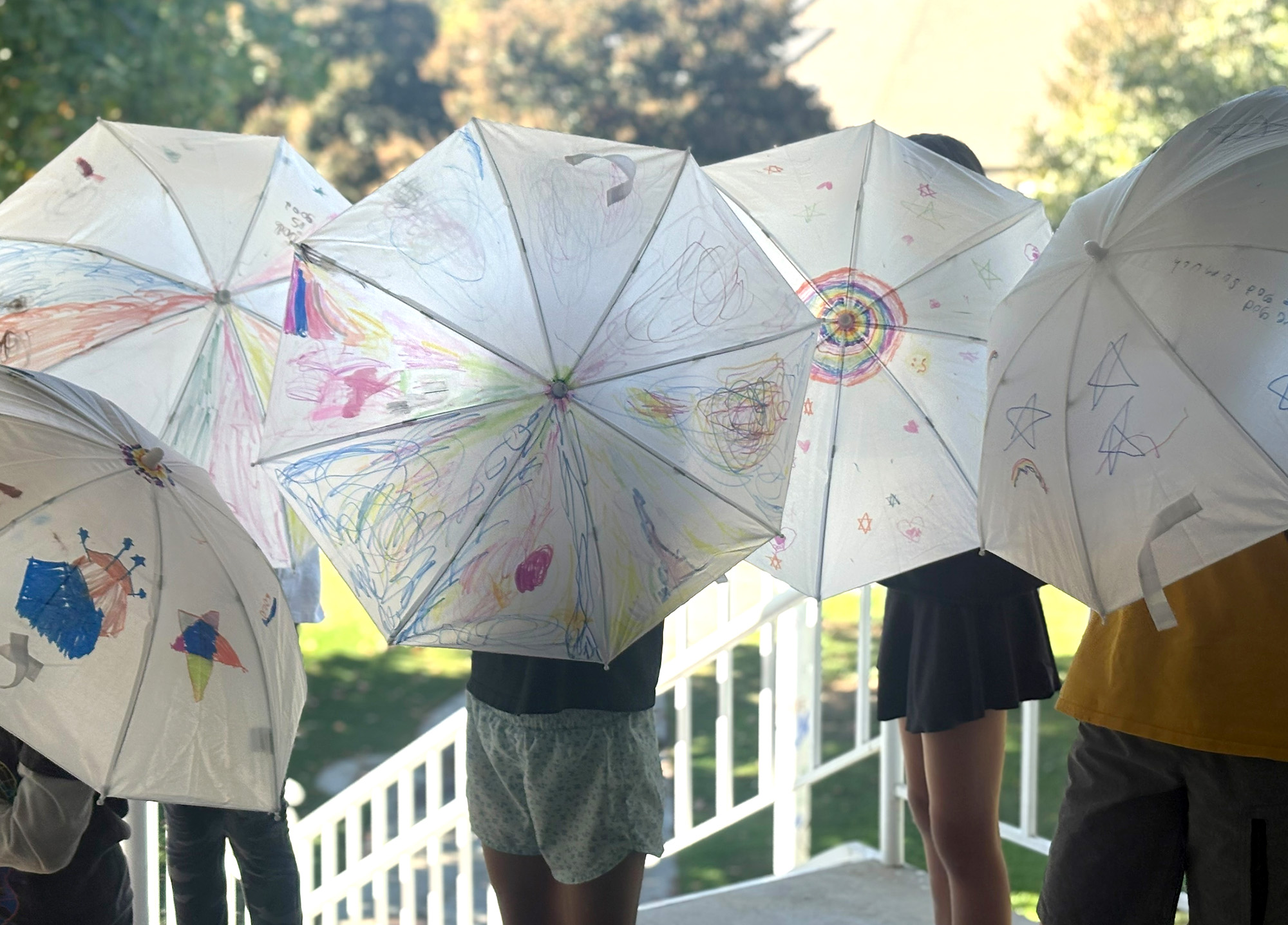
Photo caption: Sigd is a day of both all-white and beautiful colorful umbrellas which the kessim (spiritual leaders) carry up the mountain. Congregational school students at Temple Beth Israel – Fresno decorated their own umbrellas for Sigd, and carried them in the service before reading Psalms.
By Susanna Grant, Director of Education and Programming of Temple Beth Israel – Fresno
It is no great revelation to say that the Jewish educational world has historically looked through an Ashkenazic lens when viewing and teaching Judaism, Hebrew, chaggim and Israel. Including diverse perspectives and lived experiences enriches our Jewish community, rather than diminishing any one group’s contribution to our traditions. Not every Passover table has gefilte fish — an Eastern European food, nor does every table have green onions for whipping one another – a Persian Jewish tradition. What a blessing that we live in the 21st century where exposure to all the ways we can be Jewish is accessible and encouraged.
Most of my students come from interfaith families. We live in a rural area where any kind of Jew is a minority, and Jewish practice and learning usually happen only at Sunday School. So with all the challenges of getting my families to participate in Judaism at any level, why would I choose to introduce another holiday — one none of my families are familiar with, much less accustomed to observing?
Teaching Sigd is an opportunity for my students to see themselves reflected in a new tradition, offering views into the lives of Ethiopian Jews and allowing them to step into the world of Sigd by utilizing the “Windows, Mirrors, and Sliding Glass Doors” framework.
Sigd is a holy day we inherited from the Ethiopian Jewish community, also called Beta Israel, which falls 50 days after Yom Kippur and commemorates the community’s yearning for a home in Israel. The Ethiopian Jews once believed they were the last Jews left on earth, that they alone were tasked with keeping the covenant, and they dreamed of a return to Jerusalem.
As Jack Zeller notes in his review of The Falashas: A Short History of the Ethiopian Jews by David Kessler: “The genealogy of Ethiopia begins with Saba in the Bible when the descendants of Noah are listed. The queen of Sheba (Saba, too) who (legend says) visited Solomon and after whom the Song of Songs is written, is but one of the many early Ethiopian Jewish connections.”
The Beta Israel had a Torah, called the Orit, which is the Ge’ez translation of the Octateuch, which includes the five books of Moses plus Joshua, Judges, and Ruth. They lived in separate communities from the rest of the country and were called Falasha — outsider. Because they had been geographically isolated from the rest of the global Jewish diaspora before the destruction of the Second Temple, they did not observe rabbinic holidays like Hanukkah or Purim. They observed Shabbat, Rosh Hashanah, Yom Kippur, Sukkot, Passover, Shavuot and fast days like Tisha B’Av. They also observed Sigd.
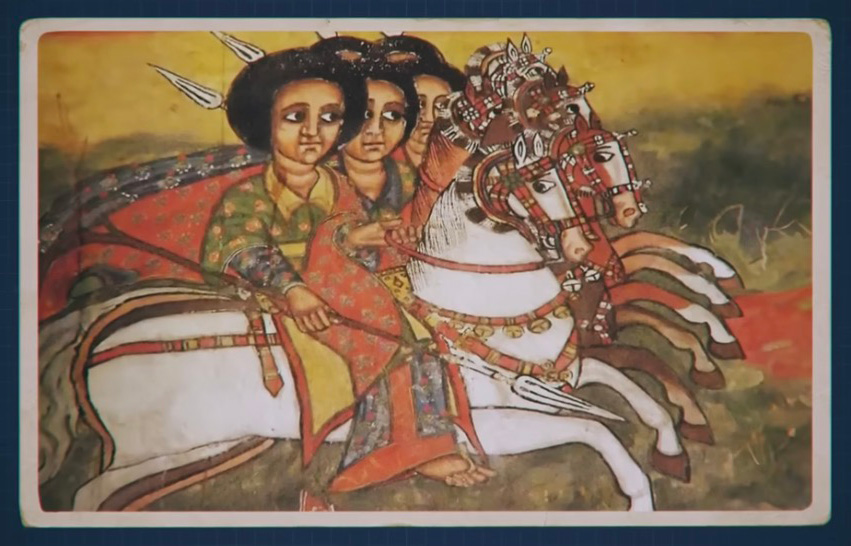
The origin of Sigd stems from a desire to return to Jerusalem, but the date when its observance began is less certain. Historians estimate the observance of Sigd began somewhere between 500 and 1400 CE. On Sigd, Jews in Ethiopia would wake early and bathe or dip in a local river and dress in traditional white clothing. They would gather as a community, often coming from different villages to hike the nearby mountain, which symbolized Mount Sinai and the acceptance of Torah. Some would carry stones on their heads as a sign of Teshuvah. Spiritual leaders called Kessim carried colorful umbrellas to provide shade on the ascent. At the top of the mountain, the Kessim would read aloud from the Orit and focus on passages about Ezra and Nehemiah returning from exile. They would fast throughout the first part of the day and pray for forgiveness and renewal of the covenant with God. They would especially pray with a longing to return to Jerusalem. They would bow down to the ground – Sigd means prostration in Ge’ez. The fast would end midday with a feast including injera, meat stews, dabo, homemade honey wine and coffee. They would descend amid the blowing of trumpets, while singing and dancing. It does not take a leap to see many connections between these and other Jewish customs.
When teaching about the holiday of Sigd and observing a Sigd Shabbat, we help students make connections between Sigd traditions and other traditions with which they are already familiar (mirror). We watch videos and testimonies of Ethiopian Jews and the various aliyot into Israel from Ethiopia, including stories of valor, heroism and sacrifice from Ethiopian Jewish leaders helping their people across the dangerous terrain in order to reach Israel, and of course, Jerusalem (window). We read psalms, eat Ethiopian food, read stories from PJ Library like Pumpkin Pie for Sigd and listen to music from the Ethiopian community (sliding door). By observing Sigd in our American communities, we embrace the diversity of our Jewish experience, connect ourselves to ancient Jewish traditions and honor the people who upheld our heritage while enriching our tradition with a special day to remind us all of the desire to return to the Jerusalem of our dreams.