By Dana Sheanin, Jewish LearningWorks’ Chief Executive Officer
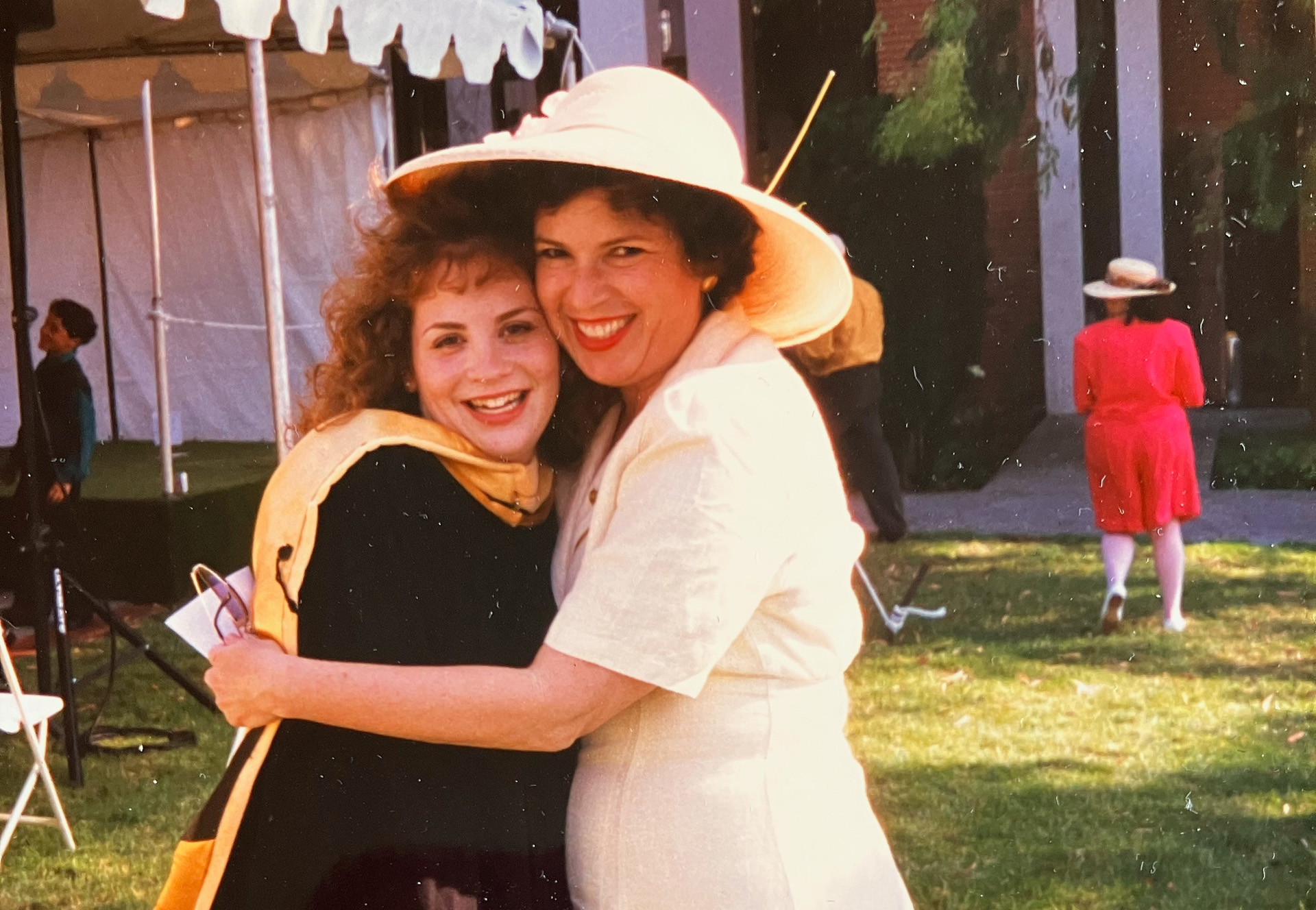
Thirty years ago this month, I graduated from Hebrew Union College and the University of Southern California. A newly minted social worker, I received a second degree in what is now called Jewish nonprofit management. Serving the Jewish community was the only career I had ever envisioned, and it still is. I have spent my professional life in organizations that equip Jewish professionals to educate, engage and build American Jewish identity — including two Federations, a private foundation, and the Union for Reform Judaism. For the past six years, I have served as Chief Executive Officer at Jewish LearningWorks. My organization is a hub of professional development for leaders across Jewish nonprofit settings, nurturing educators, inspiring innovation, and ensuring that Jewish education changes both individual lives, and the world.
Jewish LearningWorks serves more than 600 Jewish professionals each year — clergy, congregational and early childhood educators, day school, camping, youth and philanthropy professionals — in the Bay Area and beyond. This puts me in weekly conversation with the individuals who are our children’s first teachers, role models of lifelong Jewish learning, and trusted guides through adolescence. As I have observed their successes and struggles, I have become increasingly concerned about four trends that will shape the Jewish community of tomorrow. These include:
- A field-wide talent crisis
- The growing divide over Israel
- A national loneliness epidemic
- The vast unknown of AI, and its impact on education
How we respond to these, individually and communally, will determine the landscape that the next generation encounters as they grow toward adulthood. I do not believe it is an exaggeration to suggest that our failure to pay attention to these trends will have a significant impact on our children and grandchildren’s ability to sustain resilience and hope, in the face of global emergencies and rapid change.
Talent Crisis
Given my role training the leaders that sustain place-based Jewish life, the talent challenge is always foremost in my mind. Hiring difficulties in the rabbinic, early childhood, day school and congregational education professions are now well documented. These jobs generally require long hours, for far lower pay than other career choices. Communal professionals are often required to work 60+ hours a week, responding to crisis after crisis — which is unsustainable for those who wish to devote time to families or personal lives. When I began this work in 1996, I’m not sure I could have imagined what would be required of me — giving up Shabbatot and holidays with loved ones, the inability to afford Jewish camp or Israel travel for my own children, or worries about the viability of retirement, to name just a few.
Jewish nonprofit leaders, including myself, have sought to draw attention to this issue over the years, yet as is the case in secular education, they remain generally invisible to the average family. Few donors, individual or institutional, feel called to support the structural apparatus of American Jewish life. If anything in fact, funding “infrastructure” is seen as problematic by grant makers. This leaves organizations regularly challenged when trying to hire the best professionals, and then once hired, asking them to do more and more with less and less. Needless to say, this fuels difficulty in talent retention, and so the cycle continues.
Israel Divide
Those who have participated in Jewish life since October 7, 2023, would be unlikely to debate that a deep fissure has emerged in our organizations and communities. Complex and divergent feelings about the war, Israel’s government, the meaning of Jewish peoplehood, and rising antisemitism have caused pain across our organizations — not just among members, but between professionals. Countless colleagues who have left or are considering leaving the field identify the psychic pain of managing this divide among the key reasons. While some of our organizations may be physically stronger, due to greater communal investment in security, inside the doors we are decidedly weaker. A colleague recently commented to me that within a decade, she believes there will be two parallel Jewish communities — the one that remains connected to Israel, and an alternative one that is not. For the first time in my career, this does not seem impossible.
Loneliness
In 2025, former Surgeon General Vivek Murthy offered a prescription for America, in which he raised concerns about the “epidemic diseases of despair” that have eroded connective tissue across civic life. Since 2017, and the launch of the Bay Area Teen initiative, Jewish LearningWorks has directed a significant portion of our work toward improving outcomes for youth and adolescent mental health. Through mental health first aid, our Resilience Roundtable, workshops that teach skills for developing social, emotional and spiritual well being, and newer resources inviting soulful spiritual education, we have helped not just children, but also their teachers, develop the tools to live meaningful, connected, and purposeful lives, within a framework of Jewish values. Yet with the gaze of communal leadership laser focused on Israel and antisemitism, matters closer to home, including the emotional fragility of Jewish children and teens, are still too often unaddressed. It is the job of the adults that are guiding our youth to offer them the tools to become more emotionally aware and resilient.
AI
Over the past year, conversations about artificial intelligence, and the impact it will have on all elements of American life have become ubiquitous. In the world of public education, as students become more facile with using AI to complete assignments, teachers wonder aloud whether they will ultimately be replaced entirely, as all learning moves behind the screen. In the realm of Jewish education, we have known for years that the role of educator must change, from content provider to content interpreter. We are aware that we are now living through what Stanford lecturer Isabelle Hau writes is “a crisis in curiosity [where] across childhood and into adulthood, people are asking fewer questions, taking fewer intellectual risks, and spending less time learning new things… The share of young adults who express trouble learning new things has increased meaningfully in the past decade.” What becomes of Jewish tradition if we lose our sacred curiosity? Our compulsion toward asking important questions, and seeking meaningful answers? For thousands of years, Jews have studied in chevruta, in learning pairs, believing that questioning each other sharpens understanding. It is not hard to imagine a world in which Claude or Chat GPT takes the places of that chevruta. What a profound intellectual and spiritual loss this would be!
Those of us who have devoted our careers to Jewish education confront these challenges every day, and it is easy to feel overwhelmed by them. What enables me to continue to do this work is that after thirty years, I still have a core belief that the gifts of Jewish tradition — our values, learning, spiritual practice, relationship-centered communities, and commitment to the collective — are the antidote to most of what ails us.
Moving forward, as I celebrate thirty years, I recommit myself — and by extension Jewish LearningWorks — to meeting these challenges through:
- Continued advocacy for healthy organizational cultures to promote better hiring and retention
- Nourishing the leaders we have — not only through professional development — but through invitations to grow, connect and recharge with each other
- More opportunities to teach and practice the skills of nonviolent communication, to promote dialogue across difference
- Deepened commitment to placing the social, emotional and spiritual well-being of our children and teens at the heart of Jewish life
- New offerings targeting responsible and moral use of AI, assuring that as we adopt new technologies, we don’t lose sight of Jewish values
I was recently interviewed by a researcher studying the future of Jewish education. During the interview, she asked what I hoped my legacy in the field would be. It’s not a question I had ever considered, but as I anticipate the possibility of another decade (at least) in the field, her question has stayed with me. Fundamentally, I hope to continue nourishing communal caretakers and investing in their leadership, to model organizational culture that holds kavod (respect) as essential, and to take every opportunity to remind community members that even today, we are more than just our fears. We are blessed to have a rich legacy of Jewish wisdom to draw from, if only we are able to embrace it.