
Bring On that Day – הָבִיאוּ אֶת הַיּוֹם

By Jenni Mangel, Jewish LearningWorks’ Senior Director of Impact and Evaluation

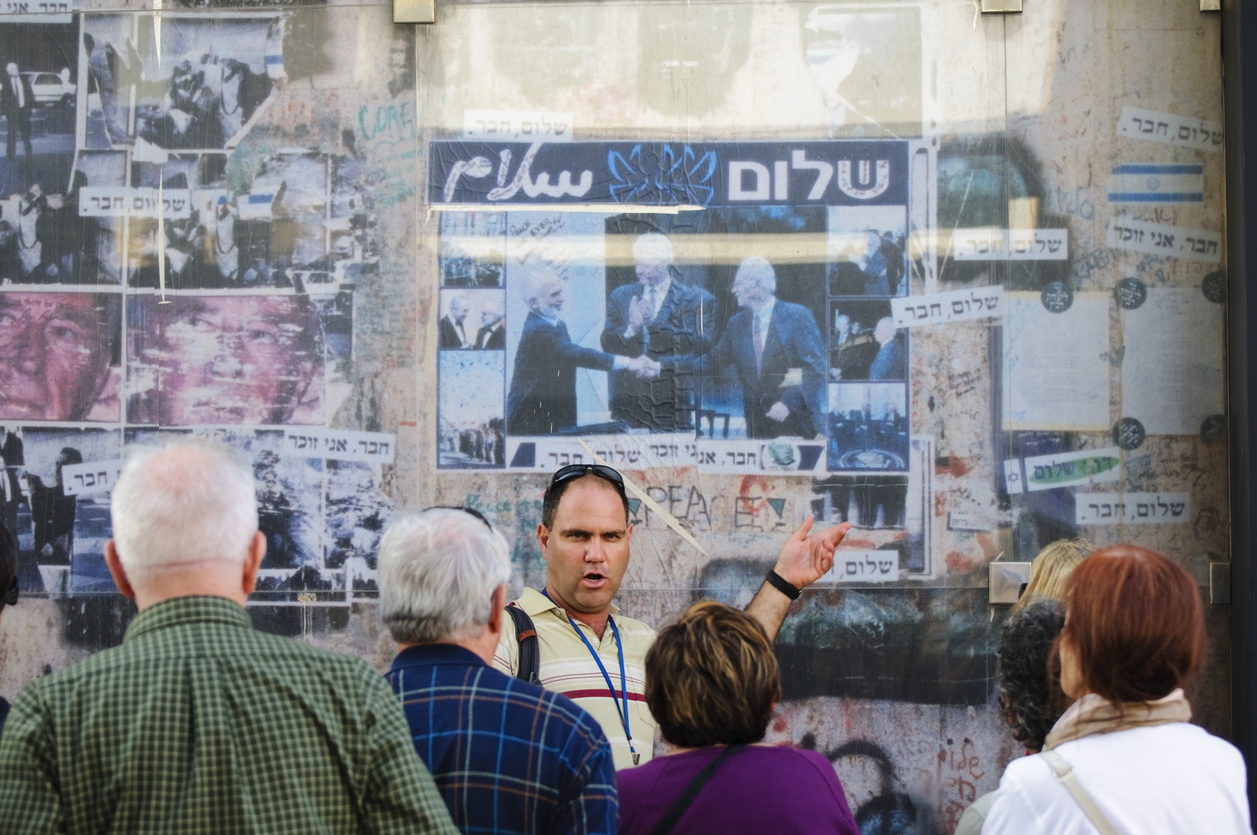
In fall of 1995 I was a second year student at UC Santa Cruz. I arrived at UCSC the previous fall fresh off a year living and working on Kibbutz Urim in the Negev. While in Israel I had watched the news, along with the world, in wonder and amazement as Yitzchak Rabin and Yasser Arafat shook hands on the White House lawn. As a student leader on campus I was hopeful and committed to the hard and difficult path towards peace and did my part by hosting guest speakers and facilitating dialogue. On a beautiful sunny day in November 1995 I again found myself watching the news, along with the world, in wonder and amazement. But this time, instead of hope and joy, I felt disappointment and sadness. Was it really possible that Rabin had been assassinated, and at the hand of another Jew? Recently, one of my children asked me, “Mom, do you really believe that peace is possible?” I considered for a moment and said, “Yes. It is the only thing that I can believe, because the other path is too painful.” As a child growing up, it was my parents’ friends who served in the military. Then it was my teachers, my peers, my students, and now my children’s friends who are of service age. Like Rabin said on the White House lawn, “Enough of blood and tears. Enough.” As a child I learned the Song for Peace, Shir L’Shalom, which Rabin had sung with others working for peace shortly before he was assassinated. One line always stood out to me:

אֶל תַּגִּידוּ יוֹם יָבוֹא

Don’t say the day will come

הָבִיאוּ אֶת הַיּוֹם

bring on that day

כִּי לֹא חֲלוֹם הוּא

because it is not a dream

My kid’s question prompted a secondary one for me: How do you keep that dream alive? How do you bring on the day? What fortifies you to keep pursuing that when the news, day in and day out, is challenging and hard to take?

For me, resilience comes from community, learning, and connection with the mystery of the universe. The soulful practices in my life, like gathering with friends and family for a meal on Shabbat or studying ancient and contemporary texts, give me the fortitude to know that I am connected to the divine and doing my part to continue building the world I want to live in.

If you’re inclined, I’d love to hear what you remember from November 1995, or how Rabin’s legacy has influenced your life. I’d love to know about the soulful practices that buoy your resilience as you teach, learn, and lead in our community.

Recent Stories