By Rebecca Goodman, Director of Jewish Community Engagement at JCRC
“Whoever listens to a witness becomes a witness” -Elie Wiesel
Elie Wiesel believed that one who listens to a witness, becomes a witness. I am lucky. My Opa (grandfather) fled Nazi Germany, and was able to live a full life in the United States. His story of survival impacted my approach to the world. His mantra was that one should always engage in learning. The Nuremberg Laws took away Jewish dignity. Eugenics made Jews untermensch, sub-human and unworthy. One thing that the Nazis could not take away was one’s education and intellect. As I listened to my Opa’s stories and teachings, I became a witness. Now you can too.
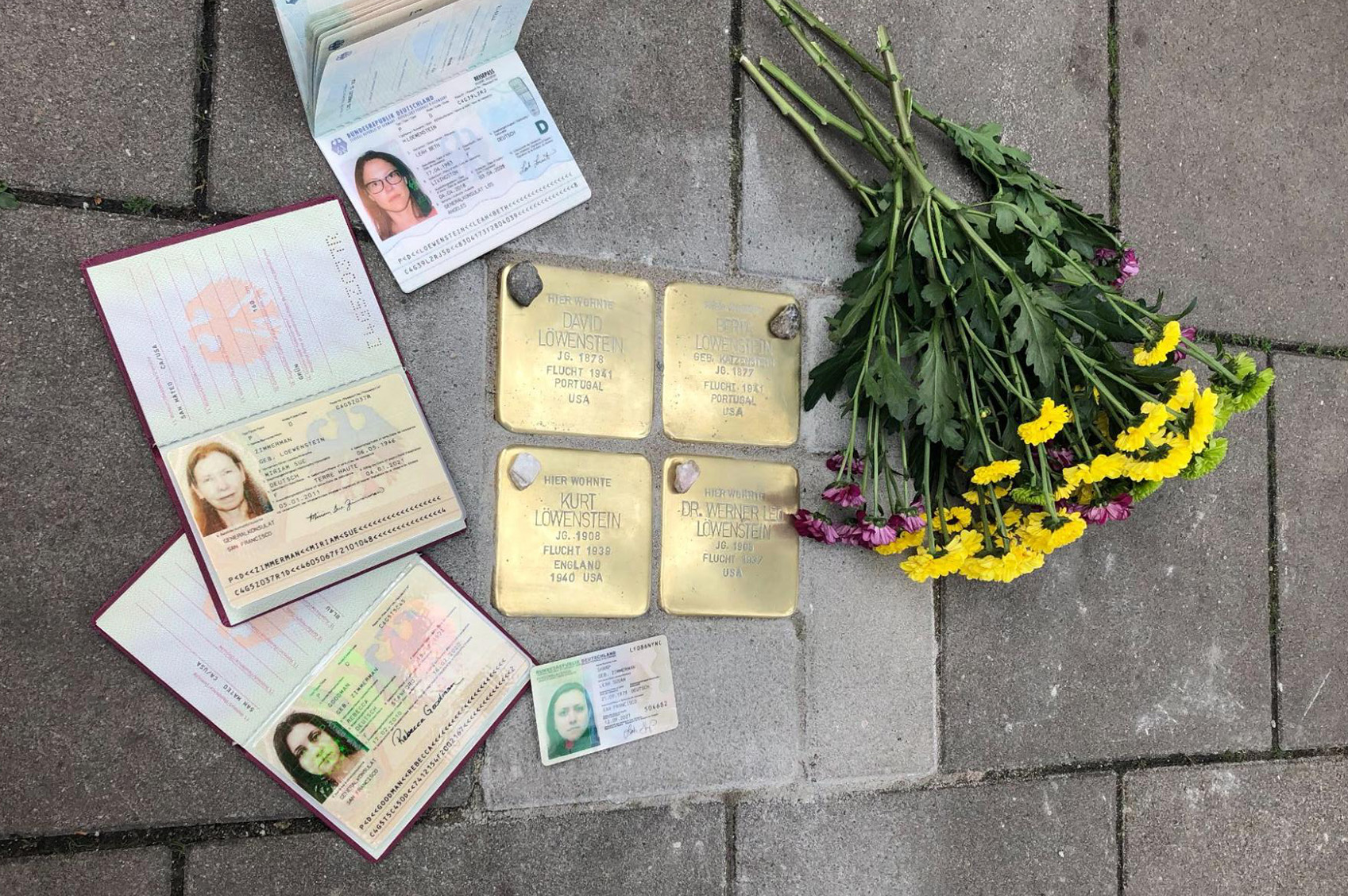
In 2018 eighteen members of my family travelled to my Opa’s hometown to witness the installation of Stolpersteine on the corner where his family home and business once stood. These “stumbling stones” were conceived by the artist Gunter Demnig to commemorate persons at the last place that they freely chose to reside, work or study (with exceptions possible on a case-by-case basis) before they fell victim to Nazi terror, forced euthanasia, eugenics, deportation to a concentration or extermination camp, or escaped persecution by emigration or suicide.To date, the stolpersteine project has grown to over 116,000 stones laid across 31 countries.
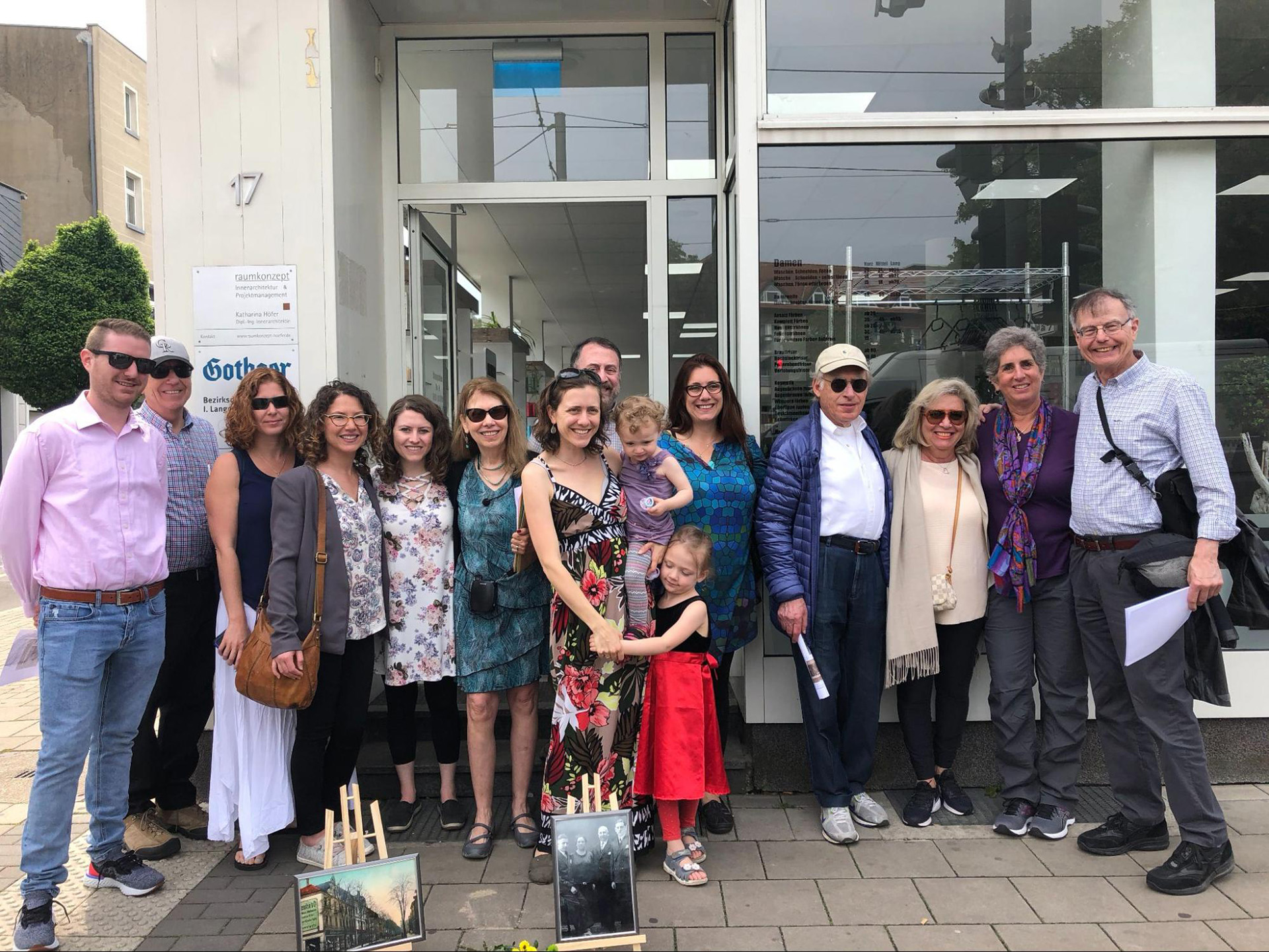
Following the installation ceremony, half our group embarked on a tour tracing our family heritage and roots through the German countryside. In the town of Brilon we spent time at the Museum Haus Hövener. My mother explained to museum staff member Carsten Schlömer in halting German that she was interested in researching her grandfather, David Loewenstein, who was born in Brilon. Schlömer’s eyes lit up. He returned to his computer and started pulling up files. He had pages and pages of information about the Loewensteins in Brilon. He explained in near-perfect English: “My students did a report on your family!”
Later, Carsten took us to an electrified model of the town, which filled most of the room. He lit up one street, explaining where, historically, most of the Jews in Brilon had lived. He also pointed out four homes where our family had lived. By now, it was past closing time, but museum archivist, Winfried Dickel, promised to open the museum an hour early for us the following day, and give us a private tour. It was a deal.
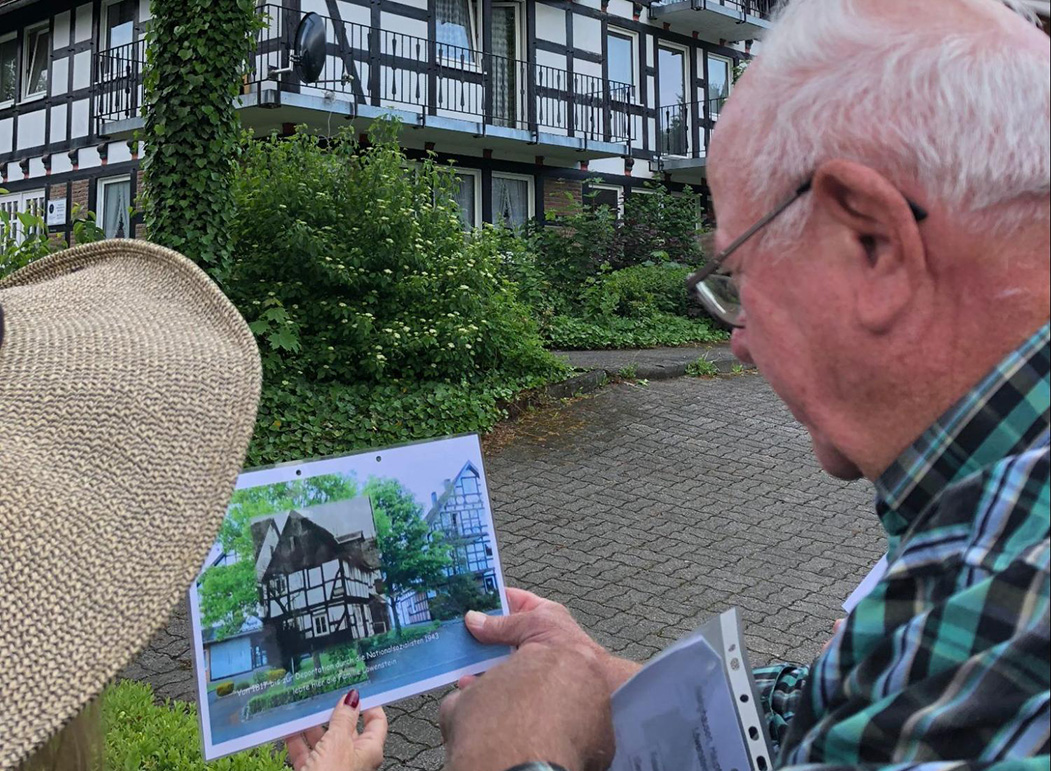
Dickel took us on a Stolpersteine walking tour of Brilon that included the four Loewenstein homes. He thoughtfully printed out pictures of the buildings in their original state so we could compare then and now. It felt like we were walking through the past, a requirement to fully embrace our present.
I am eternally grateful to those who teach about the Holocaust and remember those whose lives were cut short or forever changed.
I hope these men understand the impact that their teaching has not only on their students who are learning about the rich Jewish history of their German town, even if they never meet a Jew, but also the impact that their teaching has had on our lives 5,750 miles away. The work of these educators provided us an opportunity to bear witness to our family’s origins.
For Wiesel, listening to survivors isn’t a passive act; it’s an active commitment to remembering and testifying, carrying the burden of history forward.
What act are you going to do this Yom HaShoah so that you, too, become a witness? Some ideas: attend a commemoration event in your community, connect with a survivor, speak out and share a story of the Holocaust, write a letter or draw a picture and share it online, reach out to someone who doesn’t know and teach them, share resources with another educator, donate to an organization providing services to survivors.
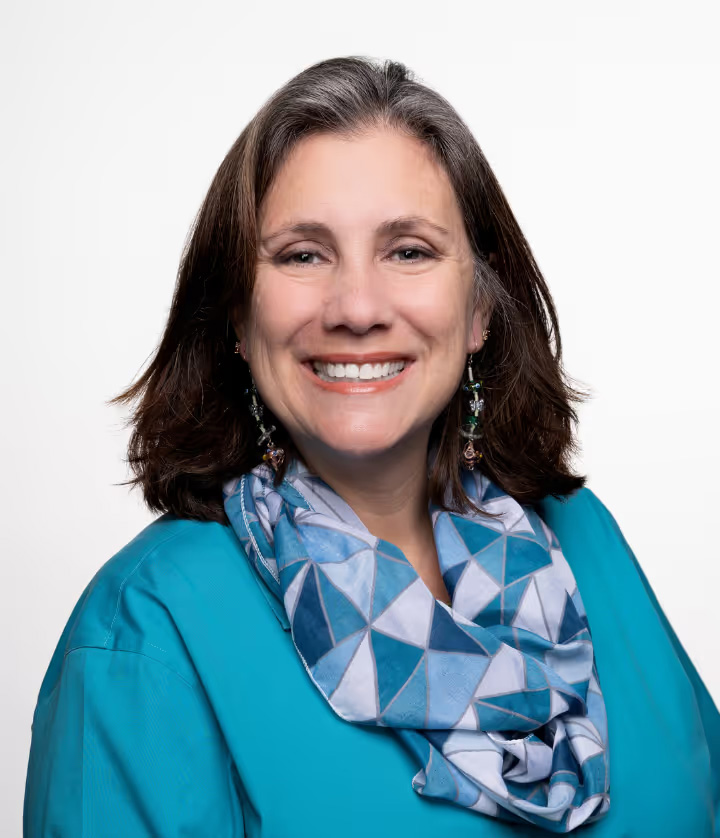
More About Rebecca Goodman
For nearly 20 years Rebecca Goodman served on the North Peninsula Yom haShoah v’haGevurah (Day of Remembrance of the Holocaust and Heroism) committee. Each year, this group of lay leaders created a service of remembrance that took place at each of the four local congregations, rotating to a new location each year. They created a multi-generational service where six teens interviewed six local survivors of the Holocaust, and shared their stories with the community. Over 75 people participated to create and lead these events for the 350+ members of the community who came to bear witness each year.
Rebecca also served as Shalhevet’s Director, a Jewish LearningWorks program providing local Jewish teens the experience of traveling to Poland and Israel to learn about the Holocaust. This program scaffolded travel with educational seminars, and a siyum presentation upon their return. The teens learned from educators and survivors, and from each other as they shared their own family’s history. You can relive their immersive experience on this Shalhevet blog from 2012.
Rebecca currently serves as the Director of Jewish Community Engagement at JCRC Bay Area.