
By Jodi Gladstone, Early Childhood Education Director at Beth El Nursery School (BENS) at Congregation Beth El, Berkeley, CA
There is a moment, familiar to every early childhood educator, when you look around your classroom and feel as though you are standing in a vibrant garden in full bloom. Each child, like a unique flower, unfolds in their own time and way. It is a place of beauty. And yet, as in any garden, there are blooms that require extra tending, a deeper understanding, or a different kind of care than we know how to give. In those moments, we are called to grow alongside it with the help of others.
At Beth El Nursery School (BENS), we began to notice that the support some children required extended beyond the traditional training of early childhood educators. We responded with curiosity to learn the why behind the behavior we were seeing. Over the past ten years, we have invited experts into our community and engaged in rich professional development. Each session sparked new ideas and new ways of seeing the children in our care.
And yet, something essential was missing.
While these workshops were meaningful, they were often brief, consisting of one or two sessions that inspired us, but didn’t leave room for the kind of relationships that true growth requires. We found ourselves starting over again and again, retelling our stories, re-explaining our classrooms, and reimagining solutions with new professionals each time. What we longed for was not just expertise, but partnership. Not just answers, but continuity. We dreamed of a world where support felt integrated, relational, and a sustained community of care.
This longing is deeply rooted in our Jewish values. In Proverbs 22:6, we are taught: “Teach a child according to their way, so that in their old age they will not turn from it.” Each child carries within them a unique path, and it is our sacred responsibility to meet them there. As Brené Brown reminds us, “True belonging doesn’t require you to change who you are; it requires you to be who you are.” For us, inclusion is not simply a strategy; it is a way of seeing and being present. It is the practice of honoring each child’s unique self and recognizing the essential role they play in our shared community. It is the practice of looking at who we are and where we are coming from. It is finding that spark in our children, their parents, our co-workers, and ourselves. Knowing that we are a part of something bigger than ourselves, and each of us plays a part.
With support from Jewish LearningWorks’ 2025-26 microgrant program, we took a meaningful step toward this vision by partnering with Sequential Development Consulting (SDC). What unfolded was more than professional development; it was the beginning of a relationship.
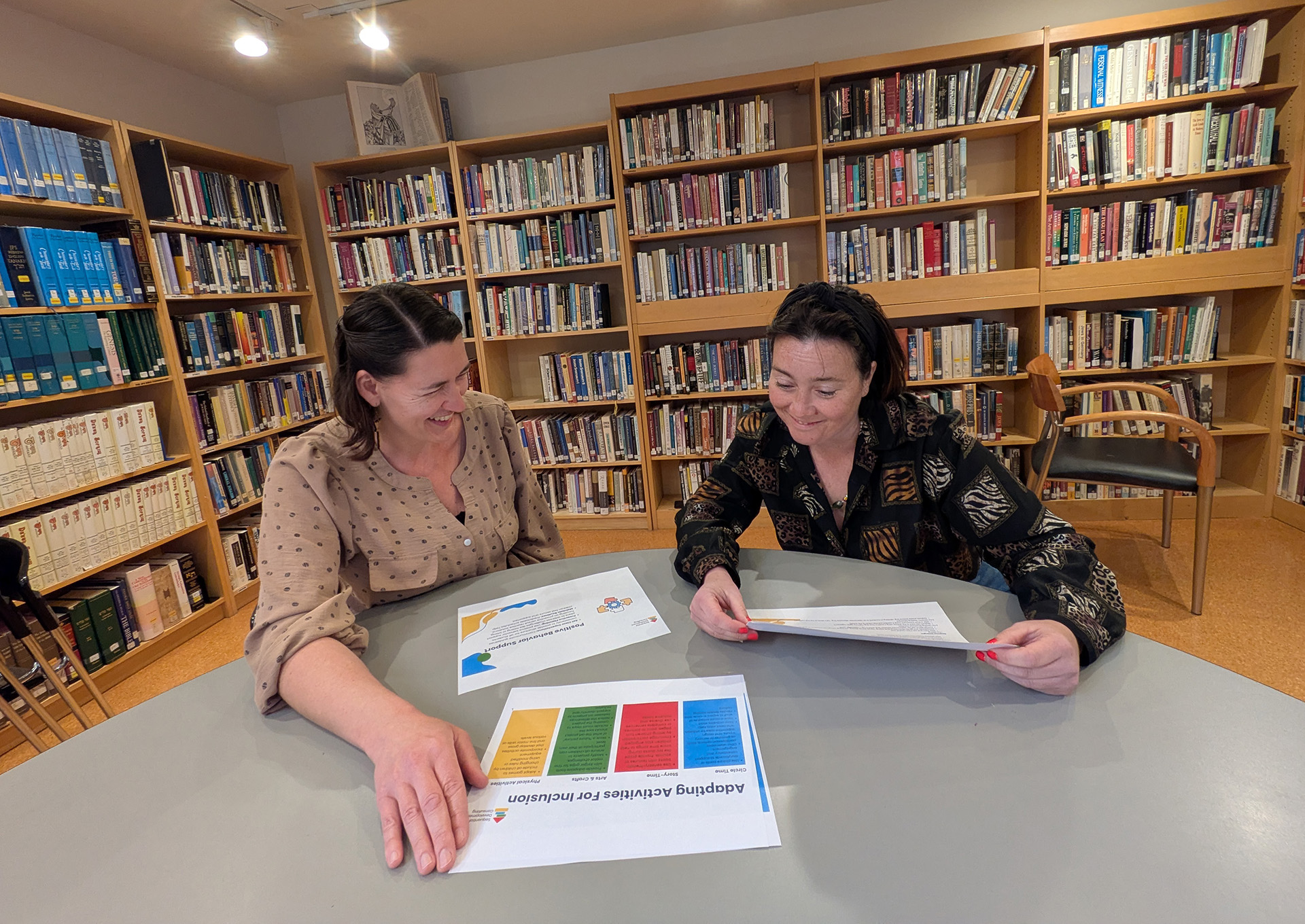
Through this partnership, their team of pediatric occupational therapists, speech-language pathologists, and mental health clinicians became part of our extended community. They visited our classrooms, both indoors and outdoors, observing not only our teaching staff, but the rhythms and rituals that define a BENS day. They took the time to understand what we mean when we say “Jewish nature and play-based curriculum” to see our values in action.
They provided each of our classrooms with a written report that was both affirming and inspiring. Teachers received comprehensive reports that highlighted their strengths alongside thoughtful, practical recommendations. After receiving these reports, our staff met as a team. With small shifts, simple changes in environment, language, or routine, we saw change. Our teachers felt seen. They were recognized not only for the challenges they navigate, but for the care, creativity, and skill they bring to their work each day.
Beyond observations, our teachers have access to ongoing consultation and real-time support for the questions that arise in the classroom. Whether exploring sensory needs, social-emotional development, or language growth, they have a trusted partner to turn to. The ability to ask, reflect, and respond in the moment has transformed not only our practice, but our confidence.
Perhaps most meaningful of all has been the sense of continuity. The team at SDC doesn’t just visit once. They return. They remember. They build alongside us. Our scheduled workshops build on each other. There is no need to begin again, because we are moving forward together. This continuity has fostered a culture of collaboration, where teachers feel supported and empowered to seek the scaffolding they need, exactly when they need it. Our teachers can contact the experts during their consulting hours. They have the freedom to use these hours as needed, allowing them to reach out when they have questions or seek suggestions or answers about their practice or individual behaviors that are popping up.
SDC also offers a library of resources for our administration, educators, and parents. Viewing child development from multiple perspectives helps us create a comprehensive understanding of the whole child. When sensory, social-emotional, and language needs are addressed with care, children can better navigate their environment, and the entire classroom feels more relaxed and joyful.
In early childhood education, relationships are the heart of our work. This partnership has reminded us that this truth extends beyond our classrooms. When educators are held in strong, thoughtful relationships, they are better able to create those same relationships with children. And when children feel seen, supported, and valued for who they are, they flourish.
We are deeply grateful to Jewish LearningWorks for helping to create this relationship through our microgrant. We at BENS will endeavor to continue this work into the coming year and beyond. Our goal is to maintain and expand this model, ensuring that every child who walks through our doors can experience a joyful, inclusive Jewish education.
At the end of the day, this is what we believe: every child deserves to belong. Every teacher deserves to feel supported. And every community is strengthened when we honor the diverse ways we are each created—B’tzelem Elohim, in the image of the Divine.
At BENS, this is not just our vision. It is our practice, our promise, and our ongoing journey.