By Devra C. Aarons, Executive Director at Contra Costa Midrasha, Walnut Creek, CA
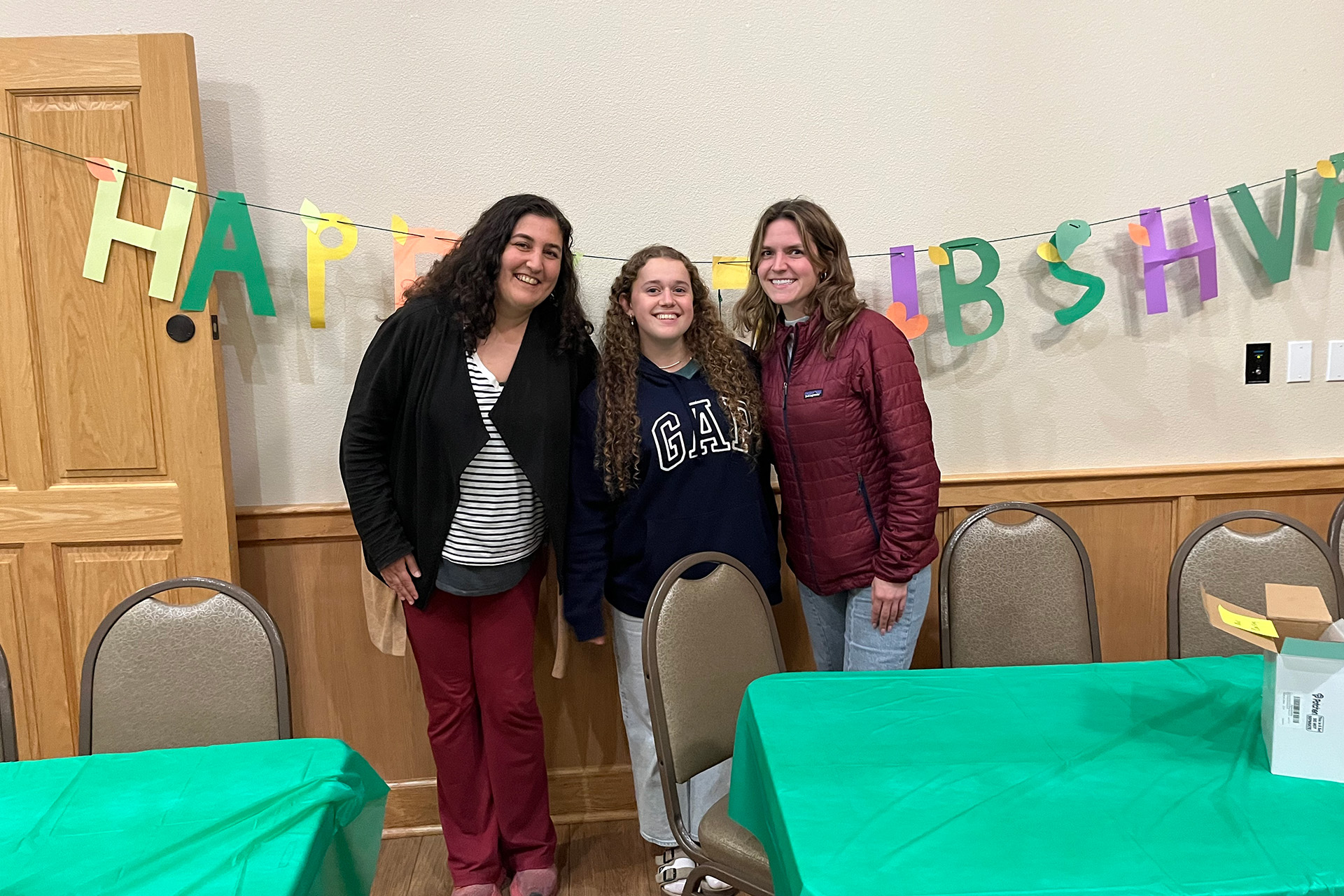
Contra Costa Midrasha is blessed with dedicated teens educators who learn and engage our Jewish teen community every Wednesday night and at three retreat weekends a year. These gifted adults know how to engage teen minds, hearts, and bodies to be vulnerable, tell stories, ask hard questions, and create hands-on approaches to think about Jewish identity, connection, and community. They are also adults with full-time jobs that do not happen at Midrasha, making professional development and team bonding difficult to schedule beyond a once or twice a year required “orientation and security” training. Yet, it’s been my dream to find a creative way to offer consistent educator and team growth more often than twice a year.
The need for Power Hour arose in my imagination after the October 7th attacks. I knew in the hours after the attack that I needed to gather our educational team. Not only did I want us to think about how we would talk with and support our teens, I wanted time for us to support each other. That Wednesday night immediately following the weekend’s horrific attacks we came together the hour before Midrasha. We shared a meal. We mourned. And we discussed what rituals we could create, what support we might provide, and what each of us would (our shared concerns, supporting hostage families) and would not discuss (the specific violence) with our teens. Being able to spontaneously meet like that was deeply valuable for our community. It set the stage for how we continued to respond to and educate for October 7th. It made me wonder, how could this be a model for us moving forward? What might a monthly structure of meeting before Midrasha provide for us as a team and a community?
Jewish LearningWorks’ microgrant for staff development gave us the opportunity to try it out this year. Our goal was to offer a chance for educators to learn “Midrasha-style” together, to discuss ongoing classroom or global challenges, and have time together to reflect on how Midrasha might support our teens in these increasingly hard times.
One theme we’ve approached this year is the “why of the what.” In other words, WHY are we engaging in this work with our teens? And WHY are we making the choices we make? Guest educator, Rabbi Eliana Kayelle from Keshet joined us in December. Rabbi Eliana started our session asking each of us to reflect on our WHY. What Jewish value guides our “why?” That evening the why in question focused on hope and resilience. We asked each other our own stories of hope and resilience. In turn, these conversations happened in our Midrasha learning spaces too.
Our team requested time to learn about storytelling as a tool to use in the classroom. We want our teens to get more comfortable sharing their life’s stories. Guest educator Dan Wolf joined us in February for a mini workshop about storytelling. Dan is a storyteller, focusing on new forms of memory with site specific workshops with teens. He challenged us to think about using art as a tool for personal connection to history, beginning with the story of our name. After free writing time, he taught us the “telephone poem” method. You write your phone number as an acrostic. On each line you write only the amount of words for each number. For example, if you have a 4-1-5 area code then line #1 could only have four words, line #2 could have one word and line #3 could only have five words, etc… We used our free writing to construct the poem. Amazingly, all of our educational team shared their poems! As we discussed at the closing of this workshop, Dan opened us up to see how this format could be used to answer all kinds of questions, not just “what is the story of your name?” We could use it to ask hard questions of our teens, or to tell the story of a beloved family member, or to cope with loss. So far our educators have used this tool on Wednesday nights and have told me they plan to use it at our upcoming Spring Retreat.
Each “Power Hour” included dinner and time together to just catch up. How’s your week? What’s happening in your life? Or for us to use a Midrasha popular check-in, “Roses and Thorns.” In this way, the power of “Power Hour,” became its ability to connect us together, beyond the weekly work. It never ceases to surprise me how a shared meal can open our connections to each other.
Now I am so grateful to have “Power Hour” built into our infrastructure. Given the events of the past month alone, the war with Iran, the attack on the synagogue in Michigan, our team knows that we have time to reflect together at an upcoming Power Hour session. It also means we can refresh our security protocols without having to schedule an additional training session. Power Hour gives our educators time to teach and learn from each other and to take those lessons and directly apply them to our learning environments. It’s made us a tighter and more connected team with a broader bag of tools each of us can employ to more deeply engage our teens in Jewish experiences and learning. This month we’re also trying a book club, reading The Moth’s guidebook for writing your own story. I hope that our year-end staff celebration might include our own mini “Moth” story hour, where we get to hear more of each other’s stories.
As we build our budget for next year, I am already layering in “Power Hour” as a designated part of our staff training.