
By Yafit Shriki Megidish, JCC East Bay Chief Jewish Education Officer, and Marla Kolman Antebi, M.S.W., Educator of Jewish Meditation and Mysticism, and trained in Spiritual Direction
When the JCC East Bay applied for Jewish LearningWorks’ 2025-26 microgrant program, we thought we were funding professional development. What unfolded became something deeper: a process that invited us to look inward as leaders and educators, and to reshape the culture of our workplace through the lens of Jewish wisdom.
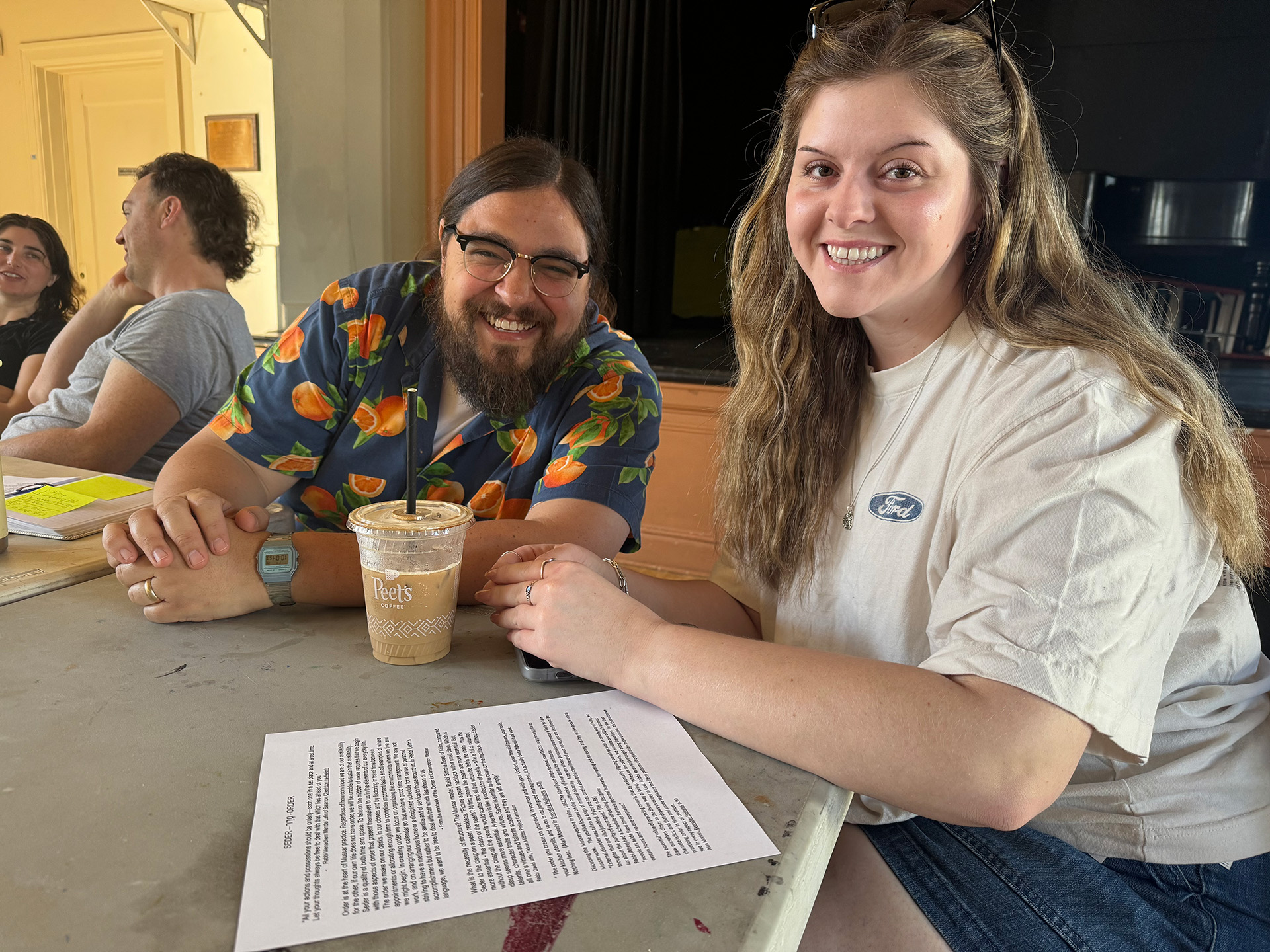
This generous grant allowed us to support two parallel processes along different learning paths: one for our directors and managers, led by Marla Kolman Antebi, and one for our educators and teaching staff, led by Elana Naftalin-Kelman.
In the managers’ and directors’ first session, Marla began with this introduction:
Mussar, meaning “discipline,” is an ancient system of character development that has regained popularity as a spiritual practice in our modern age. By studying virtues (middot, or “measures”) like patience and respect, we can heighten awareness and respond to the challenges of daily life in new, more thoughtful, and deliberate ways. The goal is to learn from every situation and interaction in order to increase balance and harmony within ourselves and in our relationships.
At first, it sounded almost obvious. Of course we wanted to learn — we are educators, leaders, professionals. But this invitation asked something deeper of us. We began the journey not just as individual participants engaged in professional development, but as a team willing to be shaped by the process.
Leadership Path: Mussar as Practice and Connecting It to Action
Our first task between sessions was to practice the concept of Hitlamdut — cultivating a neutral and curious approach toward one’s own experiences, emotions, and behaviors. We were asked to notice our internal reactions in moments of stress or frustration, pause, and observe what was happening without self-condemnation. The goal was to begin recognizing patterns and responding more consciously, rather than reacting instinctively.
Hitlamdut bridges the gap between learning a concept and allowing it to shape our daily work lives. We quickly learned that this is not theoretical work; it is a lived practice. Wisdom grows through conscious living — through constantly asking: What can be learned here?
This work pushed us to notice our tendencies along the spectrum between Chesed (expansiveness and generosity) and Gevurah (boundaries and strength). Where do we overextend? Where do we become rigid?
Through partnered learning, vulnerability, and honest reflection, our leaders began building the framework for a shared culture more deeply rooted in Jewish wisdom — one that makes space for compassion without losing clarity or accountability.
Hakarat Hatov Helps a Return to Balance
The first middah our leadership team explored was Hakarat Hatov — recognizing the good. While the idea of gratitude is familiar to many of us, this learning challenged us to move beyond personal appreciation toward a disciplined practice of recognizing the good in our workplaces, in our colleagues, in difficult interactions, and especially in moments of strain.
Marla asked us to consider how Hakarat Hatov helps us recognize the tov (the good) that, according to the Torah, is infused into all creation. Even in challenging people or situations, the good is present somewhere.
When we pause, breathe into the larger space around us, and look for that tov — in ourselves, in the other, and in the moment — our stance shifts. We respond not from reactivity, but from a place of sacred exchange and learning.
Studying the middot and applying Mussar principles can be particularly transformative for groups who work closely together. We found that it provides a shared framework, language, opportunities to practice, and ways of giving and receiving thoughtful feedback. When we support each other’s growth, systemic change can begin to take hold — leading to greater harmony within individuals, between colleagues, and across the work itself.
Educators’ Path: Middot and Inclusion
The second part of the grant supported inclusion training for our educators and teaching staff so they could better support children with diverse learning and developmental needs.
We knew this training would benefit staff as they navigated daily interactions with children, parents, and one another. Yet an unexpected outcome emerged: when managers and directors began modeling more thoughtful and inclusive leadership, the staff found it easier to embody those same principles in their classrooms and relationships.
We realized that while the inclusion training was designed as a separate track, it was actually deeply aligned with the principles of Mussar and Hakarat Hatov. When leaders embrace inclusive practices — moving away from labels and intentionally looking for the good — every level of the organization can flourish. The leadership and teaching staff may have been on two learning paths, but in truth, we were on one shared journey.
Beginning Together
One of the most significant shifts for both groups was in our starting point. Instead of beginning with challenges, negative behaviors, or deficits, we began asking new questions:
- What does it mean to lead from a foundation of recognizing the good?
- How do we help that goodness shine so that peers and adults alike see beyond a label or diagnosis?
- How do we make this not merely a feeling, but a practice in how we speak to staff, partner with families, and hold difficult conversations?
- How do we build environments where difference is not merely accommodated, but truly valued?
This reframing does not ignore difficulty; rather, it changes how we hold it. When frustration or helplessness arise — as they inevitably do — we pause and return to Hakarat Hatov. What strength is present here? What effort? What spark of curiosity, persistence, humor, or kindness might we be missing? This stance opens the door to more creative problem-solving and more compassionate responses.
The Cultural Shift
Through this process, we discovered that Mussar-based leadership development requires deep inner work. We were asked to examine habits of mind and spirit, identify our personal tendencies between Chesed and Gevurah, and practice seeing ourselves and others differently.
And as this work unfolded, something remarkable began to happen. A shared language emerged, and with it, a sense of collective learning across departments. One community began to form, and we began to experience something deeper than parallel professional development tracks. Staff across roles — directors, educators, administrators, and support staff — began to see themselves as participants in a shared ecosystem of work and purpose. Returning again and again to the practice of noticing the tov in our workplace helped us recalibrate to the larger picture: the shared mission and sacred work that connects us. Like a compass pointing toward a north star, the commitment to recognize and name the good helped orient us beyond any single challenging interaction. When we pause, breathe, and widen our view to the larger space of tov that we inhabit together, it reminds us why we are here — to serve the entire community, from the youngest preschooler to the families, staff, and participants who walk through our doors each day.
The lessons from our two paths intertwined in unexpected ways, helping us shape a cultural shift grounded in Mussar and the study of middot. Through this process, we discovered how Hakarat Hatov, Chesed, and Gevurah can become lived values across all aspects of our workplace. This generous grant from Jewish Learning Works ultimately did more than fund professional development — it helped us begin building the foundation for a more compassionate, inclusive, and Jewishly grounded community, where seeing the good is not incidental, but intentional. It allowed us to engage our managers and directors as well as our teachers and teaching staff in a process that might not have happened otherwise — and one we now recognize as essential.